
- RbcSepticServices
What Qualifies as an Emergency Septic Service and What Does Not
Septic issues often escalate quietly, making it difficult for homeowners to determine when a situation requires immediate intervention versus when it can be addressed through scheduled maintenance. Yet misunderstanding this distinction is one of the most common reasons minor problems evolve into disruptive failures.
Emergency septic service applies only when system conditions pose an immediate risk to health, property, or environmental safety, and knowing how to recognize these scenarios helps homeowners respond appropriately without overreacting or delaying critical action, a distinction frequently clarified by experienced providers such as Rbc Septic Services.
What Defines a True Emergency Septic Service Situation

A septic emergency is defined by urgency and risk, not inconvenience, because emergency conditions involve system failure that cannot safely continue operating without immediate correction. These situations typically indicate that normal wastewater flow, containment, or treatment has been compromised.
Sewage backing up into the home qualifies as an emergency
When wastewater reverses direction and enters sinks, toilets, or floor drains, the septic system has exceeded its capacity or lost its ability to process inflow, creating immediate health hazards and property damage risk. This condition requires emergency septic service because continued use worsens contamination, damages interior surfaces, and increases exposure to harmful bacteria.
Standing wastewater on the property signals system failure
Pooling sewage or gray water on the lawn, near the drainfield, or around the tank indicates that effluent is no longer being absorbed by the soil, often because the drainfield is saturated or blocked. This scenario qualifies as an emergency because untreated wastewater can spread pathogens, damage turf, and contaminate surrounding soil and groundwater.
Strong sewage odors accompanied by functional disruption require urgent attention
While faint odors alone may not always indicate an emergency, strong or persistent sewage smells combined with slow drains or backups suggest treatment failure and pressure imbalance within the system. In these cases, emergency septic service is warranted because internal processes have degraded beyond normal operating limits.
Septic failure during heavy water usage or rainfall increases urgency
When system failure coincides with storms or peak water use, risk escalates rapidly due to hydraulic overload and soil saturation. Emergency septic service becomes necessary because delaying action under these conditions accelerates damage to the tank, piping, and drainfield.
Situations Commonly Mistaken for Septic Emergencies

Not every septic-related issue requires immediate response, yet many homeowners assume urgency based on inconvenience or uncertainty rather than system risk, which can lead to unnecessary emergency calls or delayed preventive care.
Isolated slow drains do not automatically indicate an emergency
A single slow sink or tub is often due to localized plumbing issues rather than septic system failure, especially when other fixtures operate normally. While this condition should be monitored, it typically does not require emergency septic service unless it progresses system-wide.
Routine pumping needs are not emergencies by default
Septic tanks that are due for cleaning may show early symptoms such as mild odors or slower drainage, yet these signs usually indicate overdue maintenance rather than immediate failure. Scheduling service promptly is appropriate, but emergency response is not always required unless failure indicators escalate.
Minor yard dampness without odor or pooling may have non-septic causes
Occasional damp spots can result from irrigation issues, grading problems, or surface runoff rather than septic malfunction. Without sewage odor, pooling, or indoor symptoms, this condition should be evaluated, but does not automatically qualify as an emergency.
Alert notifications from monitoring systems require context
Some modern systems trigger alerts when usage thresholds are exceeded or when maintenance is due, but alerts alone do not define emergencies. Emergency septic service is justified only when alerts coincide with functional failure or health risks.
Why Misjudging Septic Emergencies Leads to Escalation

Incorrectly categorizing septic issues often leads to either unnecessary panic or dangerous delay, undermining system stability and increasing long-term costs.
Delaying true emergencies compounds system damage
When genuine emergencies are dismissed as minor issues, continued use forces wastewater through already compromised components, accelerating drainfield saturation, pipe stress, and soil contamination. Delayed emergency septic service often results in more invasive and expensive repairs.
Treating non-emergencies as emergencies masks root causes
Calling the emergency service for routine maintenance issues may resolve symptoms temporarily but fails to address underlying scheduling or usage patterns. This reactive approach reduces visibility into long-term system health and can increase the likelihood of future emergencies.
Confusion increases homeowner stress and decision fatigue
Without clear criteria, homeowners often struggle to decide how urgently to act, which leads to inconsistent responses and uncertainty. Understanding what qualifies as emergency septic service restores control and supports better long-term system management.
What Emergency Septic Service Typically Involves
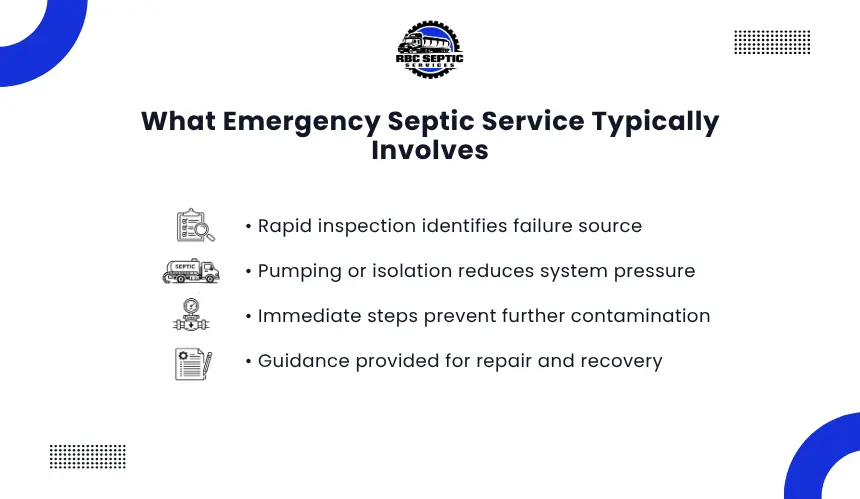
Emergency septic service focuses on system stabilization rather than full optimization, because the immediate goal is to contain risk, restore safe operation, and prevent further damage.
Rapid assessment to identify failure points
Emergency response begins with identifying whether the issue originates from the tank, piping, drainfield, or external conditions such as flooding. Accurate diagnosis ensures that corrective action targets the actual cause rather than symptoms alone.
Immediate measures to relieve system pressure
Actions may include pumping to reduce tank levels, isolating damaged components, or restricting system use to stabilize conditions. These steps are critical for preventing contamination and additional structural damage.
Guidance on usage restrictions and next steps
Emergency septic service often includes instructions to limit water use, schedule follow-up inspections, or plan corrective repairs. These recommendations help prevent recurrence as the transition from emergency response to structured resolution occurs.
Additional Notes That Improve Homeowner Awareness and Visibility

Understanding septic emergencies improves not only response time but also overall system longevity, as informed homeowners recognize early warning signs before escalation.
Emergencies are usually the end stage of long-term neglect
Most septic emergencies develop after extended delays in cleaning, inspection, or usage management, making them predictable rather than sudden. Recognizing this pattern highlights the value of routine service in avoiding crisis scenarios.
Seasonal and weather conditions influence emergency risk
Periods of heavy rainfall, snowmelt, or unusually high water usage increase stress on septic systems, raising the likelihood that borderline conditions will become emergencies. Awareness of these factors helps homeowners act proactively.
Clear documentation simplifies emergency decision-making
Knowing the tank location, service history, and system layout allows for a faster assessment when problems arise. Homeowners who maintain records reduce response time and confusion during urgent situations.
Frequently Asked Questions About Emergency Septic Service
Is a septic odor always an emergency?
No. Odors alone may indicate maintenance needs, but combined with backups or pooling, they qualify as an emergency.
Can heavy rain alone cause a septic emergency?
Heavy rain can trigger emergencies if the system is already stressed or overdue for service.
Should water use stop during a suspected emergency?
Yes. Limiting water use reduces pressure and prevents further damage until service arrives.
Is emergency pumping a permanent solution?
No. Emergency pumping stabilizes the system but does not replace corrective repairs or routine maintenance.
How can homeowners reduce emergency septic risk?
Routine cleaning, inspections, and mindful water usage significantly reduce the likelihood.
Final Perspective on Septic Emergency Awareness
Emergency septic service is defined by immediate risk, not inconvenience, and understanding this distinction empowers homeowners to respond decisively without unnecessary panic or dangerous delay. When true emergencies are addressed promptly, and non-emergencies are managed through scheduled care, septic systems remain safer, more reliable, and far less costly over time. Clear expectations, early recognition, and informed action transform septic ownership from reactive crisis management into controlled, long-term system stewardship.